
Honestly, we’ve all been there. You crash into bed after an exhausting day, turn off the lamp, pull up the blanket, and figure you’ll sleep in thirty seconds. Instead, your brain picks that exact moment to start racing.
You find yourself replaying some cringey interaction from three years ago, stressing over everything you have to do tomorrow, or just kicking off the covers because you’re suddenly burning up. You check your phone: 11:45 PM. Then 1:15 AM. Then 2:30 AM. The more you worry about not sleeping, the harder it gets to actually fall asleep.
If that sounds like your typical night, don’t sweat it. You aren’t broken, and a ton of people go through the exact same thing.
Most of us spend the day staring at screens, running around, and expecting our minds to just instantly shut off the second our head hits the pillow. But that’s just not how our bodies work. You need a little bit of time to actually wind down and drop your gear before you can drift off.
Here are 15 simple, zero-BS habits that actually help you quiet your head and sleep better.
1. Wake up at the same time every day

Your body loves routine. If you go to bed and wake up at completely random hours throughout the week, your body never knows when it’s supposed to feel tired.
- The fix: Pick a realistic wake-up time and stick to it seven days a week—even on weekends. Once your wake-up time stays solid, your body naturally starts getting tired around the same time every night.
2. Make your bedroom colder than you think it needs to be
It is almost impossible to sleep well in a warm room. Your body temperature actually needs to drop a little bit for you to fall asleep and stay asleep.
- The fix: Turn the thermostat down to around 60°F to 67°F (15°C to 19°C) before bed, crack a window, or drop the heavy synthetic blankets for simple, breathable cotton sheets.
3. Turn off overhead lights an hour before bed
Bright, direct lighting tricks your brain into thinking it’s still daytime, which stops your body from releasing melatonin (the stuff that naturally makes you drowsy).
- The fix: After dinner, turn off the harsh ceiling lights. Switch to low floor lamps, warm-toned bulbs, or just dim the room down so your eyes realize the day is ending.
4. Swap late-night drinks for herbal tea

Booze might knock you out at first, but it ruins your sleep quality and usually wakes you up at 3:00 AM needing water or the bathroom.
- The fix: Make a hot cup of chamomile or peppermint tea about 45 minutes before bed. Sitting there holding a warm mug is a surprisingly easy way to force yourself to slow down.
5. Write down whatever is looping in your head
If you lie in bed trying to remember tomorrow’s to-do list or constantly stressing over work, your brain won’t let you sleep because it’s afraid you’ll forget something important.
- The fix: Keep a cheap notebook by your bed. Spend three minutes writing down everything you need to do tomorrow or whatever is bugging you, close the book, and leave it for the morning.
6. Take a warm shower before getting into bed
When you step out of a warm shower into a cooler bedroom, your skin cools off fast. That sudden drop in body temperature signals to your brain that it’s time to sleep.
- The fix: Hop in a warm shower or bath about an hour and a half before bed. If you take a bath, toss in some Epsom salts—the magnesium helps relax stiff muscles.
7. Try the 4-7-8 breathing trick
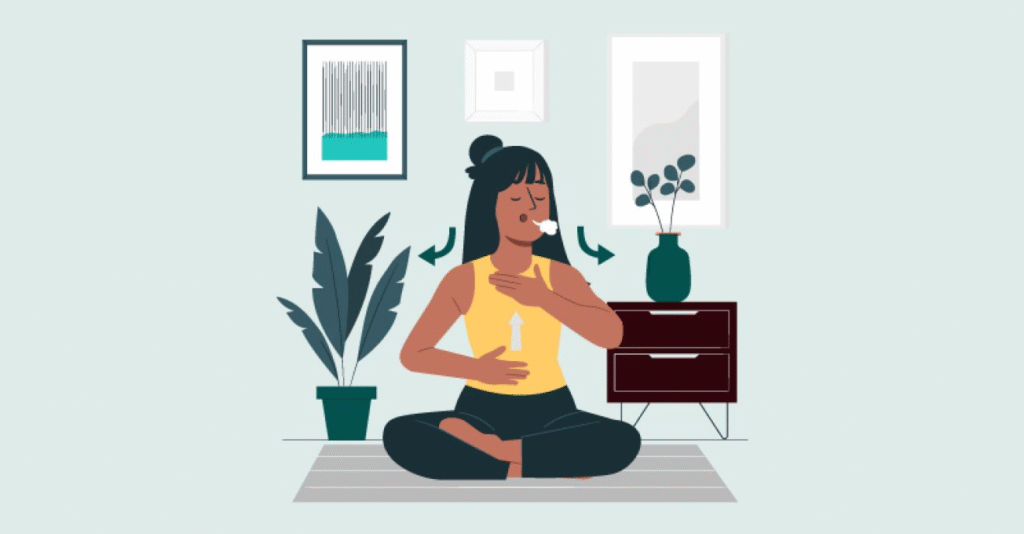
If you’re lying there with your heart beating fast because you’re stressed about staying awake, you need to physically force your heart rate to slow down.
- The fix: Inhale through your nose for 4 seconds, hold it for 7 seconds, and exhale slowly through your mouth for 8 seconds. Do that 4 or 5 times in a row. It forces your body out of fight-or-flight mode.
8. Put your phone in another room
Scrolling social media or reading news in bed hits your brain with blue light and constantly feeds you new information, keeping your nervous system totally wired.
- The fix: Set a cutoff time to put your phone away an hour before bed. Plug it in across the room or in the kitchen, and buy a cheap basic alarm clock so you aren’t using your phone to check the time.
9. Stop drinking coffee after 2 PM
Caffeine hangs out in your system way longer than most people realize. Even if you can fall asleep after an evening espresso, it blocks your brain from getting into deep, actual restorative sleep.
- The fix: Set a hard rule to stop drinking coffee, energy drinks, or soda by 2:00 PM. Switch to water or decaf after lunch.
10. Use natural scents to trick your brain
Our sense of smell is directly linked to mood and stress. Using the same calm scent every night builds an automatic trigger that tells your brain it’s time to chill out.
- The fix: Diffuse lavender or cedarwood essential oil in your room while you get ready for bed, or put a drop on your wrist and take a few slow breaths.
11. Squeeze and release your muscles to drop tension

We carry an insane amount of physical tension in our shoulders, jaws, and backs without even noticing it until we lie still in the dark.
- The fix: Lie on your back and squeeze your toes as tight as you can for 5 seconds, then let go completely. Move up to your calves, thighs, stomach, shoulders, and jaw. Squeeze, then release. You’ll feel your whole body sink right into the mattress.
12. Read an actual paper book
Scrolling a screen throws endless random posts at your eyes, but reading a physical book under a dim reading lamp gives your eyes a single, steady rhythm to follow.
- The fix: Keep a light novel or short story collection on your nightstand. Read a few pages until your eyelids start feeling heavy, then shut off the light.
13. Don’t eat a massive meal right before bed

If you go to sleep on a completely stuffed stomach, your body has to spend the first half of the night working hard to digest food instead of resting. On the flip side, going to bed starving will wake you up at 3:00 AM with low blood sugar.
- The fix: Try to finish dinner 2 to 3 hours before sleep. If you’re starving right before bed, eat a tiny bite like a handful of almonds or a banana.
14. Keep naps under 30 minutes (and take them early)
Napping for an hour and a half at 5:00 PM is the easiest way to guarantee you won’t be tired at 11:00 PM. You’re basically burning off all the natural sleep pressure your brain built up all day.
- The fix: If you really need a nap, keep it under 25 minutes and make sure you finish it before 3:00 PM.
15. Get out of bed if you can’t sleep after 20 minutes
If you lie in bed for an hour getting angry that you aren’t sleeping, your brain starts linking your bed with anxiety, frustration, and staying awake.
- The fix: If you’ve been tossing and turning for 20 minutes, get up. Move to a chair in a dim room, read a book or listen to quiet music, and only get back into bed when you’re actually nodding off.
How to actually start
Don’t try to change all 15 of these things tonight—that’s just going to give you something else to stress about.
Just pick two basic ones to start with. Put your phone away an hour early tonight, keep your room cool, and see how you feel. Give your body a little time to adjust, and the rest will start getting a lot easier.
FAQ’S
Q: What if I’m doing everything right and I’m still wide awake?
Stop staring at the ceiling and getting annoyed. Just get up, sit in a dimly lit room, read something boring, and only head back to bed when you can barely keep your eyes open.
Q: Is taking stuff like melatonin actually a good idea?
It’s fine if you’re severely jet-lagged or changing shifts, but relying on it every night is a band-aid. Fixing your actual routine makes a much bigger difference.
Q: How long until this stuff actually starts working?
Give it about a week or two for your body to catch on. Don’t throw in the towel if you still toss and turn on night one.
Q: Can I just sleep in on Saturdays to make up for terrible weekday sleep?
It feels amazing in the moment, but sleeping in till noon wrecks your clock for Monday. Try not to sleep in more than an hour past your normal alarm.
Q: At what point should I stop reading tips online and just see a doctor?
If you’ve genuinely tried fixing your environment for a month and still feel like a zombie every single day, go get checked out by a doctor.