
A study room is never just four walls, a pine desk, and a shelf heavy with paper. When you strip away the furniture, it is an intimate sanctuary for the mind. It is a quiet clear-cut in the forest of daily noise where curiosity takes root, ideas unfold like fresh leaves, and ambitious goals slowly settle into real focus.
Whether you are navigating the steep learning curves of school, tackling complex college research, acquiring new professional skills, or simply unwinding with a book that challenges your perspective, the physical environment around you shapes your internal landscape.
We often forget how deeply human we are. We are creatures of environment. Our focus, mood, and mental stamina are anchored to the light, textures, sounds, and order of the room we inhabit. A thoughtful, organic setup acts as a soft invitation to sit down, take a deep breath, and do your best thinking. Conversely, an uncomfortable or cluttered nook drains your energy before you even open a notebook.
Creating a space that truly serves you doesn’t require a fortune or designer furniture. It simply requires self-awareness. It’s about cultivating an environment that honors your natural focus, simplifies your daily rituals, and gives your mind the breathing room it needs to grow.
1. Finding Your Anchor: The Right Study Desk
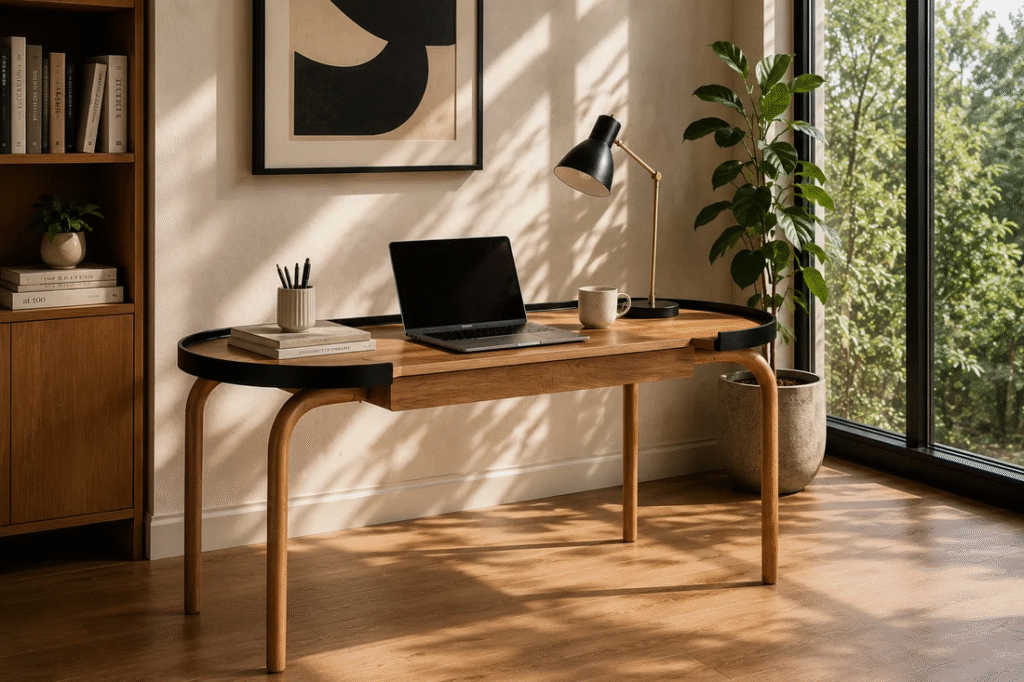
think first about how your mind works best when you are in the flow. Do you spread out like a painter, relying on physical books, open journals, and color-coded notes lying side by side? Or does your mind feel lighter with a minimal, compact footprint built for a single screen and a cup of tea?
Posture is where geometry meets physical well-being. A surface that sits too high forces your shoulders into a perpetual hunch; one that is too low bends your spine like a bowed reed. Your arms should fall comfortably at a natural angle, wrists resting easily, with your display seated at eye level to prevent neck fatigue.
If space is tight, don’t feel restricted. Wall-mounted drop-leaf tables, corner desks, or foldable workstations can tuck away cleanly, preserving the natural flow and airiness of a smaller room. The goal isn’t sheer size; it’s finding a space that comfortably holds your work without overwhelming your senses.
2. Supporting the Self: The Psychology of the Chair
It is easy to focus on the desk and treat the chair as an afterthought. Yet, your chair is your primary physical link to the task at hand. Studying is an act of endurance, and physical discomfort is the fastest way to break a fragile state of deep focus.
When your lower back lacks support or your feet hover uncomfortably off the floor, your body works overtime behind the scenes just to keep you upright. That subtle physical strain slowly leaks into your mental stamina, leading to restlessness, low-grade aches, and constant breaks.
The right chair works quietly in the background. It shouldn’t be so plush that it lulls you into a afternoon nap, nor so rigid that it feels like a punishment. Look for an adjustable seat that encourages an active, grounded posture:
- Lumbar curve: Supports the natural S-shape of your lower spine.
- Grounded feet: Allows your soles to rest flat on the floor or a footrest.
- Adjustable height: Keeps your elbows aligned smoothly with the desk surface.
A good chair honors the human form, letting you forget about bodily aches so your attention can stay focused where it matters most.
3. Light, Rhythm, and Sight: Illumination for the Eyes
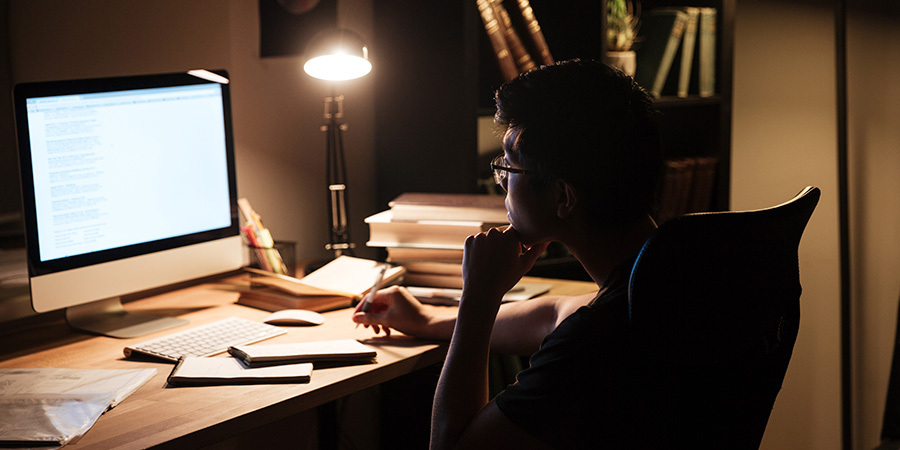
Yet, lighting is often one of the most neglected details in a home workspace.
Whenever possible, let natural sunlight lead the way. Placing a desk near a window allows daylight to sweep across your workspace, instantly boosting your mood and anchoring your body to the natural progression of the day. Looking out a window during brief study breaks gives your eyes a chance to rest on the distant horizon—a gentle physical reset that reduces cognitive fatigue.
As the sun sets or in rooms with limited windows, artificial light steps in. A dedicated desk lamp with adjustable brightness and warm-to-neutral color temperatures becomes essential. Position the light source to avoid harsh reflections on screens or shadow casts across your writing hand:
- Right-handed writers: Position the lamp on your left side.
- Left-handed writers: Position the lamp on your right side.
A well-lit desk creates a cozy, focused circle of light, drawing your attention inward while keeping eye strain and headaches at bay.
4. Outer Order, Inner Calm: Storage as Mental Space
There is a quiet, proven connection between physical clutter and mental noise. When a desk is buried under a chaotic forest of unread mail, random cords, and loose paper, the brain constantly processes those visual interruptions in the background.
Organizing your space isn’t about creating a sterile, lifeless showroom. It’s about building a friction-free ecosystem where everything you need is intuitive to find.
- Vertical Shelving: Keeps reference books and manuals within reach without stealing valuable desk real estate.
- Concealed Storage: Drawers, wooden boxes, or fabric bins hide away smaller items like pens, cables, and paperclips, keeping visual clutter to a minimum.
- The “Clear Desk” Rule: Keep only the tools for your current task on the main desktop.
When your workspace is clear, your mind has room to expand, wander, and synthesize complex ideas without unnecessary friction.
5. Analog Tools in a Digital Age

There is a distinct neurological magic in the physical act of writing. When you hold a pen, underline a passage in a book, or scribble notes in a paper journal, your brain processes information more deeply than when typing on a keyboard.
| Tool Type | Primary Role | Human Benefit |
| Analog (Notebooks, Pens, Sticky Notes) | Drafting, synthesizing, brainstorming | Promotes deep retention, tactile focus, zero digital distractions |
| Digital (Laptops, Tablets, Monitors) | Research, writing, resource access | Offers speed, expansive storage, instant connectivity |
The secret lies in intentional balance. Use digital devices for research, connectivity, and drafting, but keep your analog tools—a smooth pen, fresh paper, highlighters, and sticky notes—close at hand for true reflection.
To keep technology from taking over your workspace, tame your digital tools: group charging cables, silence non-essential desktop notifications, and treat your screen as a tool rather than a distraction.
6. Cultivating Focus: The Anti-Distraction Refuge
A truly productive study room is a sanctuary designed to protect your attention span. Focus is a fragile resource; once broken, it takes time and mental energy to regain your rhythm.
Building a focused space begins with identifying your personal attention drains. Is it the constant ping of phone notifications? The murmur of household chatter? Or perhaps a cold, uncomfortable draft?
- Establish Boundaries: Treat your study hours as dedicated, quiet time.
- Digital Hygiene: Keep your phone out of sight, or use focus modes to block social media during work sessions.
- Sensory Balance: Choose wall colors that soothe the mind—soft earth tones, muted greens, or gentle off-whites act like a soft background hum, keeping the room peaceful.
By setting clear boundaries, your study space becomes a powerful cue for your brain: When I am here, I am present, calm, and ready to learn.
7. Breathing Life into the Room: Personal Touches
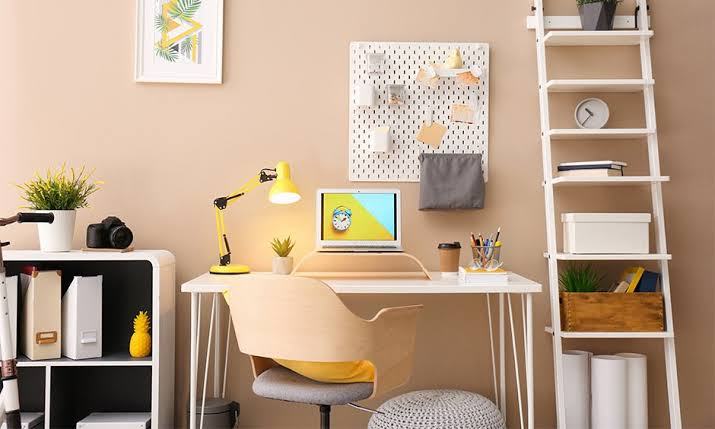
A small potted plant—like a low-maintenance pothos, snake plant, or succulent—adds a touch of life, softens hard desk lines, and quietly refreshes the room’s energy.
- Natural Accents: Plants, wood textures, or natural stone coasters.
- Personal Inspiration: A favorite piece of art, a framed family photograph, or a meaningful quote tucked near your monitor.
- Comfort Elements: A soft textured cushion or a light throw blanket for cooler evenings.
The trick is striking a thoughtful balance. Personalize your space enough to make it feel welcoming and uniquely yours, but leave enough open space so your mind doesn’t feel crowded.
8. The Daily Reset: Sustaining Long-Term Harmony
Setting up a study space is a wonderful first step, but maintaining it is what keeps your mind sharp over time. A study room is a living space that grows and adapts alongside your goals.
End every study session with a brief, intentional “Daily Reset”:
- Close your notebooks and tuck pens back into their holders.
- Return reference books to their shelves.
- Wipe down your desktop and clear away empty cups.
- Set out tomorrow’s primary task right in the center of the desk.
This simple, three-minute ritual acts as a soft closing note for your work day. It signals to your brain that it is time to rest, while ensuring that tomorrow morning, you return to a clean, inviting slate—ready to learn, create, and grow once again.
Frequently Asked Questions
1. Is a proper desk chair actually worth it, or is a dining chair fine?
Your chair makes or breaks your study session. A dining chair feels fine for twenty minutes, but sit on it for two hours and your back will be screaming. A supportive seat keeps you comfortable so you can actually focus on your work instead of your aching lower back.
2. How do I stop getting so drowsy at my desk?
Drowsiness usually means bad lighting, stale air, or sitting still for too long. Crack a window, swap warm yellow bulbs for bright white daylight, and stand up to stretch every hour. If your desk feels like a dim, cozy cave, your brain naturally thinks it’s bedtime.
3. What if I have way too many textbooks and zero storage?
Look up! When desk and floor space are tight, floating shelves above your workspace are a lifesaver. Keep only the books you’re using today on your desk, and stack the rest on a shelf until you actually need them.
4. How can I make my study spot feel less depressing on a budget?
It’s all about small personal touches. Pin up a picture of a favorite memory, grab a cheap desk plant, or let in as much natural light as possible. A warm, lively space makes sitting down to study feel way less like a punishment.
5. How do I actually stop picking up my phone while studying?
Out of sight, out of mind. If it’s sitting next to your notebook, you will check it. Put it in another room, or slide it into a desk drawer face-down on “Do Not Disturb” until your study timer goes off.