
There is a very specific kind of frustration that comes with frizzy hair. You wash it, condition it, carefully brush it, maybe even spend twenty minutes styling it, and for a moment everything looks great. Then you walk outside. A little humidity hits your hair, the wind decides to join in, and suddenly your smooth hairstyle looks completely different. Some strands are sticking up, the ends look fluffy, and your hair seems to have developed a personality of its own.
If that sounds familiar, you are definitely not alone.
Frizz is one of those hair problems that can make even a simple morning routine feel unnecessarily complicated. Sometimes your hair feels dry and rough. Other times it looks fine when you leave home but becomes puffy later in the day. And then there are those mornings when you do absolutely nothing wrong and your hair still refuses to cooperate.
The good thing is that managing frizz does not have to mean buying a bathroom full of expensive products or following a complicated ten-step routine. Often, it comes down to a few everyday habits, the way you wash and dry your hair, how much heat you use, and whether your hair is getting enough moisture.
The aim is not to make every single strand perfectly straight or completely eliminate your natural texture. Real hair has movement, texture, flyaways, and personality. The idea is simply to make it softer, smoother, healthier-looking, and easier to handle.
So, if your hair has been giving you a hard time lately, here are some simple things you can try.
1. Start With a Shampoo That Does Not Leave Your Hair Feeling Stripped
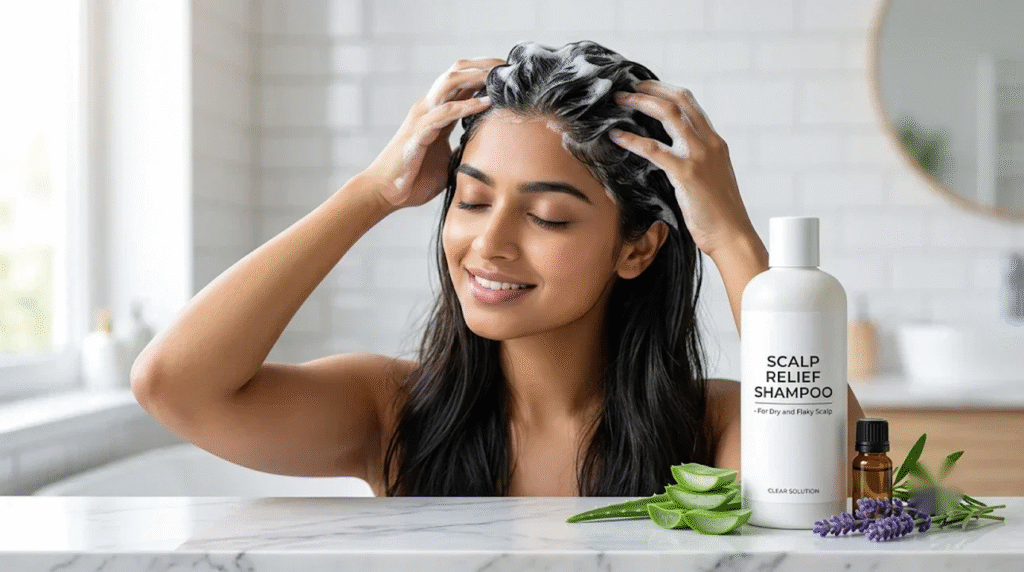
Shampoo is supposed to clean your scalp, but your hair should not feel like it has been completely drained of moisture afterward. If your hair feels extremely dry, rough, or squeaky after every wash, your shampoo may be doing a little too much.
You do not need to scrub your hair from roots to ends as though you are washing a kitchen floor. Your scalp is where most of the oil and buildup are, so concentrate your shampoo there. Gently massage the scalp with your fingertips and let the lather move through the lengths when you rinse.
This small change can make washing feel much gentler.
If your hair is naturally dry, thick, curly, or chemically treated, you may especially notice the difference when you stop treating your lengths so aggressively. Clean hair does not have to feel bone-dry to be healthy.
2. Please Do Not Skip Conditioner
If you are dealing with frizz and regularly skip conditioner, your hair may be asking you for a little extra help.
Conditioner makes hair feel softer and easier to manage after washing. It can also make detangling less of a battle, which matters because tugging at knots is another thing that can leave your hair looking rough and damaged.
Apply conditioner mainly through the lengths and ends. You do not need to coat your scalp unless the product is specifically designed for that purpose. Let it sit for a couple of minutes while you finish your shower, then rinse.
It is such a basic step, but sometimes the basic things are the ones that make the biggest difference.
3. Give Dry Hair the Moisture It Is Begging For
A lot of frizz comes down to hair that simply feels dry. When your strands are lacking moisture, they can look rough, puffy, dull, and difficult to control.
Think about the difference between dry skin and moisturized skin. Dry skin tends to feel tight and rough, while properly moisturized skin feels softer and more comfortable. Hair has its own version of that problem.
Try adding a moisturizing conditioner, leave-in conditioner, or occasional hair mask to your routine. You do not need all three at once. Start with one product and see how your hair responds.
And give it some time. Haircare is rarely a one-use miracle. Consistency usually matters much more than constantly switching products.
4. Stop Rubbing Your Hair With a Towel

This is probably one of the easiest habits to change.
After washing your hair, you may automatically grab a towel, wrap it tightly around your head, and rub your hair until it feels almost dry. It is quick, familiar, and completely understandable.
Unfortunately, wet hair is delicate, and aggressive rubbing creates friction. That can leave the hair surface rougher and contribute to tangles, breakage, and frizz.
Instead, gently squeeze the water out of your hair with your hands. Then use a soft towel, microfiber towel, or even a clean cotton T-shirt to gently blot away the remaining moisture.
You are not trying to polish your hair dry. You are simply removing excess water without roughing up the strands.
5. Be Patient When Your Hair Is Tangled
We have all been there. You find a knot, pull the brush through it, it gets stuck, you pull harder, and suddenly you are standing in front of the mirror wondering why your hair has personally offended you.
Try a different approach.
Start at the ends and work upward gradually. If the hair is very tangled, use conditioner or a suitable detangling product to give the strands some slip. Take small sections instead of attacking the entire head at once.
It might take an extra few minutes, but your hair will appreciate the gentler treatment.
And if you have long, curly, or thick hair, this can make an especially noticeable difference.
6. Choose Your Comb or Brush Carefully
Not every brush works equally well for every type of hair.
If your hair tangles easily, a wide-tooth comb may be a better option than a very dense brush. Curly and wavy hair can also respond differently to brushing than straight hair, especially when dry.
The important thing is to find something that helps you detangle without pulling unnecessarily.
You do not need the fanciest brush on the internet. You need one that works comfortably with your hair type and does not make every detangling session feel like a wrestling match.
7. Give Heat Styling a Little Less Control Over Your Life
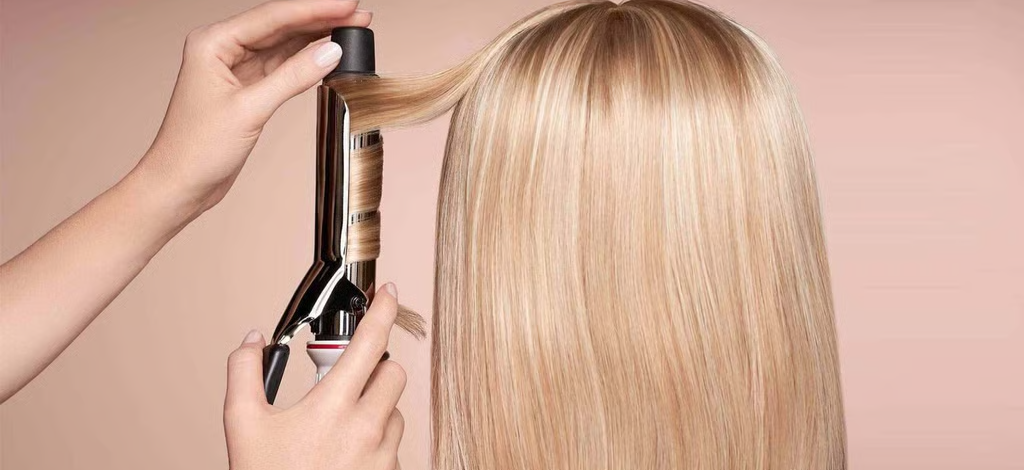
Straighteners and curling irons are incredibly convenient. When your hair refuses to cooperate, a few minutes with a hot tool can make everything look instantly more put together.
The problem comes when heat styling becomes an everyday necessity.
Frequent high heat can leave hair dry, brittle, and more difficult to manage. And once the hair becomes damaged and rough, you may end up using even more styling products and heat to make it look smooth again.
It becomes a frustrating cycle.
You do not have to stop using your favorite styling tools completely. Just try using them less often when possible, choose an appropriate heat setting, and use heat protection before styling.
On days when your hair does not need to look perfectly polished, let it rest.
8. Add a Leave-In Conditioner When Your Hair Needs Extra Help
Sometimes regular conditioner simply is not enough, particularly if your hair is very dry or becomes frizzy shortly after washing.
That is where a leave-in conditioner can be useful.
After washing, apply a small amount to damp hair, focusing mainly on the lengths and ends. Start with less than you think you need. You can always add another tiny amount, but removing too much product is not nearly as easy.
A good leave-in can make your hair feel softer and easier to work with without requiring a complicated styling routine.
And honestly, there is something nice about stepping out of the shower knowing your hair already has a little extra protection and moisture.
9. Use Serum Without Turning Your Hair Into an Oil Slick
Hair serum can be great for smoothing the appearance of flyaways and rough-looking ends, but there is a fine line between “smooth and shiny” and “why does my hair look wet?”
You only need a small amount.
Rub the serum between your palms first and gently smooth it over the lengths and ends. Avoid dumping a large amount directly onto your roots unless the product specifically says it is suitable for that area.
If you have fine hair, start with an especially small amount. If you have thick or coarse hair, you may need slightly more.
Hair serum should be the finishing touch, not the main event.
10. Do Not Assume You Need to Wash Your Hair Every Day
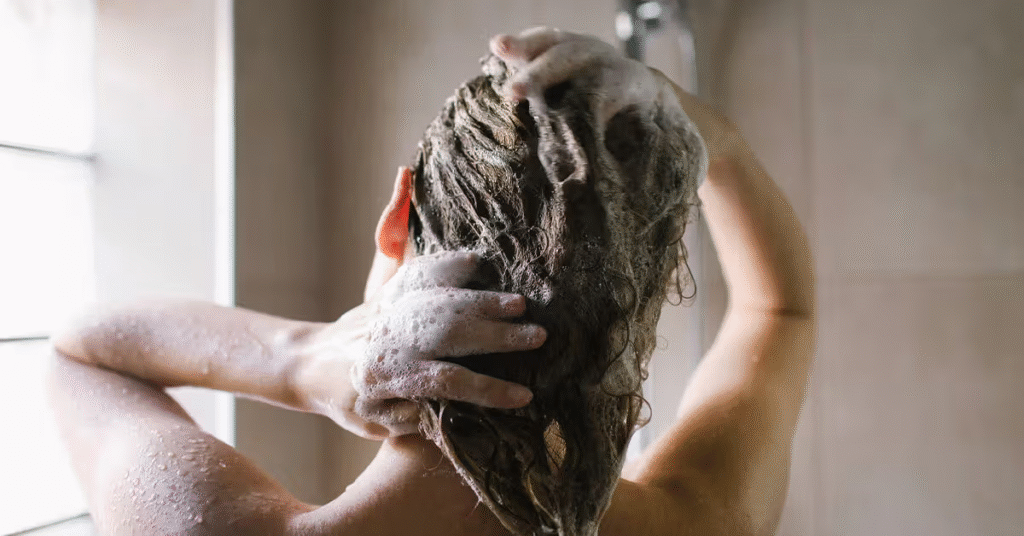
There is no universal number of days that everyone should go without washing their hair.
Some people have oily scalps and genuinely feel better washing more frequently. Others have dry, curly, thick, or textured hair and find that washing too often leaves their hair feeling rough.
Instead of following a strict schedule just because someone online says you should, pay attention to your own scalp.
Does it feel oily? Is there visible buildup? Does your hair feel dry after washing? Does your scalp feel comfortable?
Your answers matter more than a random haircare rule.
11. Think About Your Pillowcase
Your hair spends several hours rubbing against your pillow while you sleep. You probably do not think about it because you are, well, asleep.
But all that movement can contribute to tangling and friction.
A smoother pillowcase may help reduce some of that friction. If your hair is long, you can also loosely secure it before bed, as long as the hairstyle is comfortable and does not pull tightly at your roots.
And if you shower at night, try not to go to bed with soaking-wet hair. Wet hair is more vulnerable to friction, and waking up with a giant tangled mess is not exactly the relaxing morning anyone wants.
12. Stop Touching Your Hair Every Five Minutes
This one is harder than it sounds.
You fix one strand. Then another. Then you run your fingers through your hair because it feels a little messy. Then you check the mirror again. Before you know it, you have touched your hair twenty times.
All that touching creates friction and can disturb your hairstyle. It can also transfer oils from your hands onto your hair.
Once you have styled your hair, try leaving it alone.
If one little strand refuses to behave, you do not have to rearrange your entire head because of it.
Sometimes perfection is the thing making your hairstyle look less natural.
13. Give Yourself a Weekly Haircare Reset
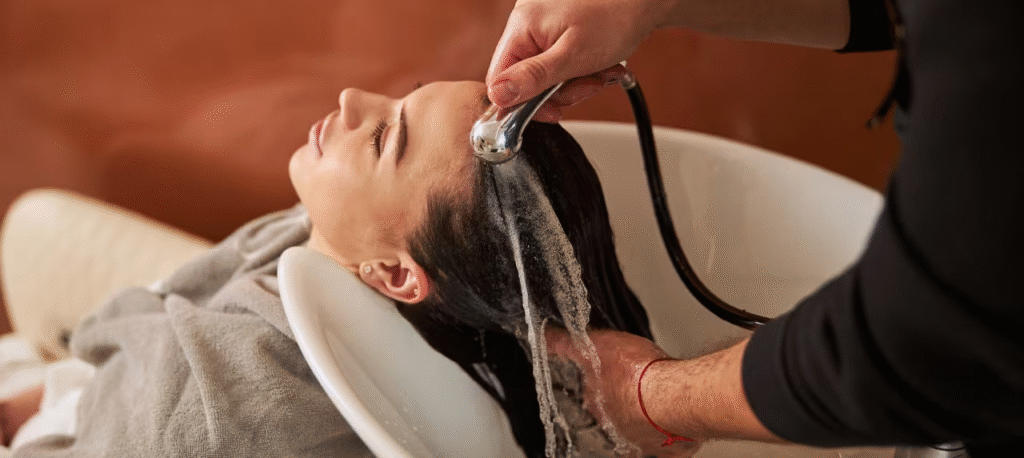
Your hair does not need a spa day every evening, but giving it some extra attention once a week can be a nice habit.
Depending on your hair type, you might use a moisturizing hair mask or a richer conditioner. Put it on while you are doing something else, let it sit according to the product instructions, and rinse it out.
There is no need to make this feel like another chore.
You can use those few minutes to relax in the shower, listen to music, think about absolutely nothing, or simply enjoy the fact that nobody is asking you to do anything.
Haircare can be practical and relaxing at the same time.
14. Respect Humidity Instead of Fighting It
If your hair behaves beautifully indoors but turns into a fluffy cloud the moment you step outside, welcome to the humidity struggle.
Moisture in the air can affect the way hair behaves, especially when the hair is already dry or naturally textured.
On humid days, you may find that a lightweight anti-frizz product, leave-in conditioner, or smoothing serum helps keep things under control. Hairstyles that work well with your natural texture can also be easier than trying to force every strand into a perfectly straight shape.
And sometimes, you simply have to accept that the weather has opinions.
Your hair does not need to defeat the humidity to have a good day.
15. Keep Your Ends Looking Fresh With Regular Trims
If the ends of your hair are split, rough, or constantly catching on your clothes, they can make the entire hairstyle look frizzier.
Regular trims can help remove visibly damaged ends and keep the overall shape looking cleaner.
If you are growing your hair, do not worry that trimming automatically ruins your progress. A trim does not make hair grow faster from the roots, but it can help you maintain the appearance and condition of the lengths.
You do not need a dramatic haircut every few weeks. Sometimes a small cleanup is all you need.
The Biggest Secret to Managing Frizz? Stop Fighting Your Hair

One of the most useful things you can learn about frizzy hair is that it does not always need to be “fixed.”
Your hair has its own texture. Maybe it is naturally wavy. Maybe it is curly. Maybe it is thick and full. Maybe it is fine but gets fluffy around the crown. Maybe it looks completely different depending on the weather.
That is normal.
The more you understand your natural hair pattern, the easier it becomes to work with it rather than constantly trying to force it into something else.
For example, someone with curly hair may find that brushing it repeatedly throughout the day makes it puffier. Someone with fine hair may discover that heavy oils make their hair flat. Someone with dry hair may realize that shampooing too frequently makes their ends feel rough.
There is no single “perfect” haircare routine.
There is only the routine that makes sense for your hair.
A Simple Frizz-Control Routine You Can Actually Follow
If you are overwhelmed by all the advice surrounding haircare, forget the complicated routines for a moment.
Start with the basics.
Wash your scalp gently when it needs cleaning. Condition your lengths every time you wash. Be gentle when your hair is wet. Avoid rubbing it aggressively with a towel. Detangle slowly instead of pulling through knots. Give your hair enough moisture. Use heat protection when styling with hot tools. And try not to touch or brush your hair constantly throughout the day.
That is already a pretty solid routine.
If your hair still needs extra help, then add one product at a time. Maybe that is a leave-in conditioner. Maybe it is a serum. Maybe it is a weekly mask.
Adding everything at once makes it impossible to figure out what your hair actually likes.
Things That Can Make Frizz Worse
Sometimes the easiest way to manage frizz is to stop doing the things that are making it worse.
Constant heat styling can leave hair dry. Rough towel drying creates friction. Aggressive brushing can cause breakage. Skipping conditioner can leave strands feeling rough. Using far too much styling product can create buildup and make hair difficult to manage.
Even constantly changing your routine can become a problem.
You try one product for three days, decide it is not working, buy another one, switch shampoos, add an oil, try a mask, and suddenly your hair has no idea what is happening.
Give your routine a chance.
Hair usually responds better to consistency than chaos.
Do You Need Expensive Products to Control Frizz?
Not necessarily.
There are plenty of good haircare products at different price points, but a high price tag does not automatically mean a product will work better for your particular hair.
A reasonably priced conditioner that works beautifully for your hair is more useful than an expensive product that leaves it heavy or greasy.
Before buying something new, think about what problem you are actually trying to solve.
Is your hair dry? Look for moisture.
Is it difficult to detangle? Look for conditioning and slip.
Are you using heat frequently? Look for heat protection.
Are the ends rough? A lightweight smoothing product may help.
Once you know what you need, shopping becomes much less confusing.
When Frizz Is Not Just a Styling Problem
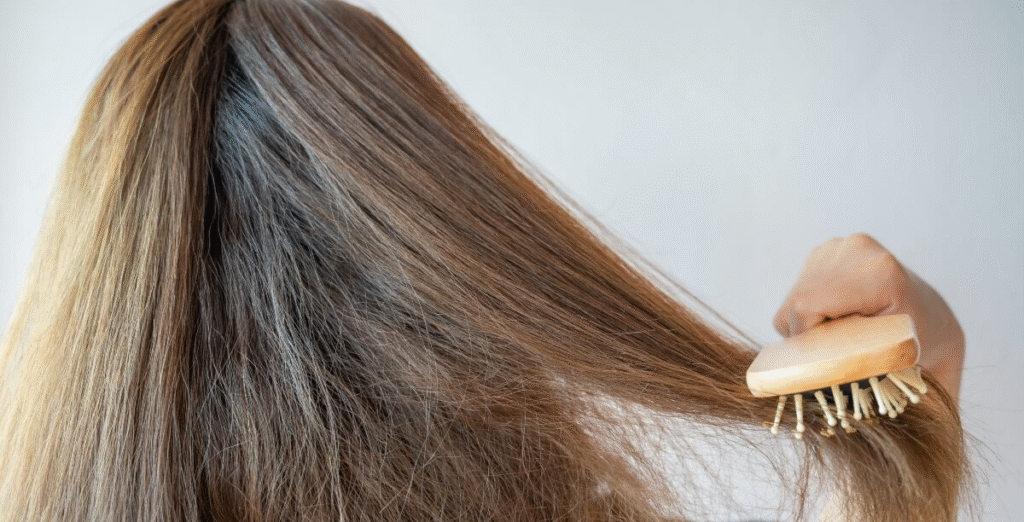
Most everyday frizz can be managed with better haircare habits, but sometimes noticeable changes in your hair or scalp deserve more attention.
If your hair suddenly becomes extremely dry or brittle, you notice unusual breakage, or your scalp has persistent itching, irritation, scaling, or other changes, consider speaking with a dermatologist or qualified professional.
The same goes for noticeable or persistent hair loss. Cosmetic products may improve how your hair looks, but they cannot diagnose the reason behind a sudden change.
Knowing when to handle something at home and when to ask a professional is also part of good haircare.
Frizzy hair can be annoying, but it does not have to control your entire routine.
You do not need to wake up every morning and spend an hour trying to convince every strand to lie perfectly flat. Start by treating your hair a little more gently. Give it enough moisture. Be careful when it is wet. Cut back on unnecessary heat. Find products that suit your actual hair type instead of buying whatever happens to be trending.
And most importantly, give yourself a little breathing room.
A few flyaways do not mean your hair looks bad. A little texture does not mean your routine has failed. Your hair is allowed to move, change with the weather, and occasionally have a completely unreasonable day.
The goal is not perfectly controlled hair every single morning. The goal is hair that feels healthy, comfortable, soft, and manageable enough that you can get on with your day without constantly worrying about it.
Sometimes, that is more than enough.
FAQ’S
1. Why does my hair suddenly become super frizzy?
Usually, it’s a mix of dryness, humidity, and everyday hair damage. Sometimes the weather alone is enough to turn a good hair day into chaos.
2. What is the easiest way to calm frizzy hair?
Start with plenty of moisture and be gentle when washing, drying, and brushing. You don’t need a shelf full of products to see a difference.
3. Is it okay to brush frizzy hair when it’s dry?
If your hair is curly or wavy, dry brushing can make it look bigger and puffier. A gentle detangle while damp is often much kinder to your hair.
4. Can washing my hair too often make it frizzy?
It can, especially if frequent washing leaves your hair feeling dry and stripped. Let your scalp and hair decide how often they actually need a wash.
5. Will hair serum get rid of frizz completely?
Serum can definitely make those stubborn flyaways look smoother and more polished. Just use a little—too much can leave your hair looking greasy instead of glossy.

Jackets for Men: How to Style Casual Jackets for Everyday Wear
A casual jacket is one of those pieces you do not really appreciate until you…

15 Outdoor Decor Ideas for a Beautiful and Cozy Backyard
A backyard does not have to look like something from a home magazine to feel…

15 Easy Ways to Tame Frizzy Hair and Make It Smoother
There is a very specific kind of frustration that comes with frizzy hair. You wash…

How to Choose the Best Kitchen Appliances for Your Home
A kitchen has a funny way of becoming the busiest room in the house. You…
How to Treat Acne: Simple Tips for Clearer Skin
There is almost nothing more infuriating than waking up, walking into the bathroom, looking in…

The Ultimate Kitchen Essentials Buying Guide: What You Really Need
If you are setting up your first real kitchen, tearing down a cluttered nightmare of…