
If you are setting up your first real kitchen, tearing down a cluttered nightmare of cheap gadgets, or simply wondering why cooking dinner feels like fighting your tools instead of using them, here is the truth: You only need about ten core items to cook 95% of the meals you will ever make. Everything else is just noise designed to separate you from your money and take up space on your counter tops.
Here is the ultimate, no-fluff guide to what you actually need in your kitchen, what you can safely ignore, and where to put your hard-earned cash.
The Non-Negotiable Core
If your home were on fire and you could only save one box of kitchen gear (assuming your family and pets are already outside), these are the tools you’d want in that box.
1. The Chef’s Knife (8-Inch)
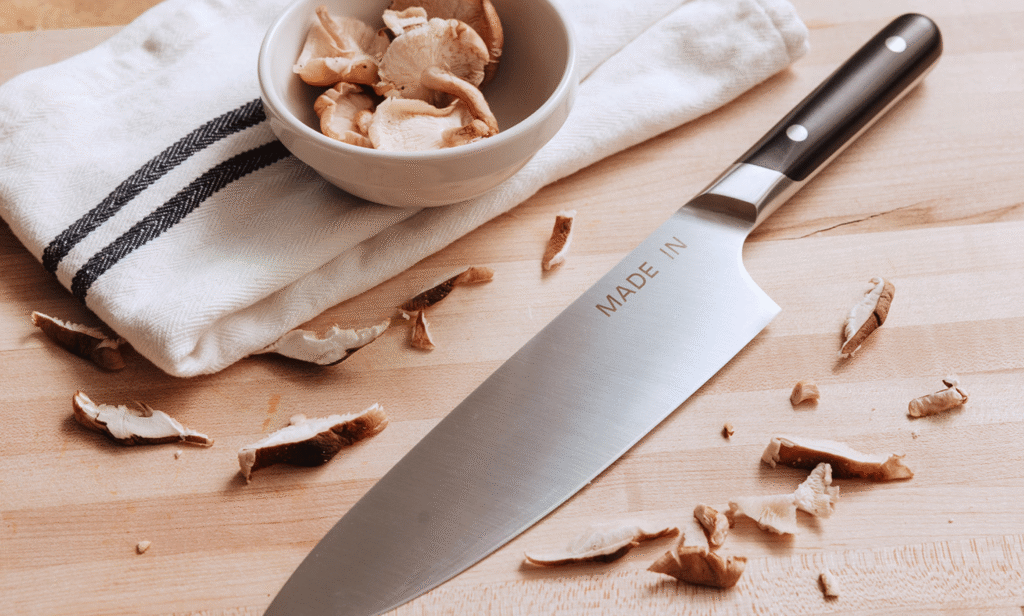
Your knife is an extension of your hand. If you take away only one piece of advice from this entire guide, let it be this: Stop buying 18-piece knife blocks. They are filled with mediocre steel, take up a massive chunk of counter space, and force you to pay for six steak knives you don’t need.
Instead, spend that same budget on one really good 8-inch Chef’s Knife.
- Why 8 inches? It’s the sweet spot. It is long enough to cross-chop a huge pile of herbs or slice through a butternut squash, but nimble enough to dice an onion precision-style.
- Western vs. Japanese:
- Western (German style like Wüsthof or Zwilling): Thicker blade, slightly heavier, curved edge for a rocking motion. These are workhorses. You can hack through chicken bones without worrying about chipping the blade.
- Japanese (like Shun or Global): Harder steel, thinner blade, sharper out of the box, flatter profile. They slice like a laser, but they are more brittle. Drop one on a tile floor or hit a beef bone, and you might chip the edge.
- Western (German style like Wüsthof or Zwilling): Thicker blade, slightly heavier, curved edge for a rocking motion. These are workhorses. You can hack through chicken bones without worrying about chipping the blade.
- What to buy: If you want a lifetime tool, look at a German 8-inch chef’s knife or a Japanese Gyuto. If you’re on a budget, the Victorinox Fibrox Pro 8-Inch Chef’s Knife costs around $40-$50 and consistently beats out $200 knives in blind performance tests.
2. A Solid Cutting Board (Wood or High-Density Plastic)
A great knife on a terrible kitchen cutting board is a quick way to destroy a $150 piece of steel.
- Never use: Glass, granite, marble, or ceramic boards. Cutting on these surfaces is like taking a hammer to your knife’s edge. Every time the steel hits glass, it micro-chips. Stop doing it immediately!
- The Best Option: Large end-grain wood or edge-grain wood (like Maple, Walnut, or Teak). Wood is naturally antimicrobial, gentle on knife edges, and looks stunning on a counter.
- The Practical Option: High-density polyethylene (plastic) boards. They are cheap, dishwasher safe, and easy to sanitize after handling raw poultry.
- Pro Tip on Size: Go bigger than you think you need. A tiny 8×10-inch board means chopped onions will constantly roll off onto the floor. Get a board that is at least 12×18 inches.
3. A 10-Inch or 12-Inch Cast Iron Skillet
If you could only own one pan for the rest of your life, this is it.
Cast iron gets a bad reputation for being high-maintenance, but that’s largely a myth propagated by internet pedants. You can wash it with a drop of soap. You can use metal utensils on it. And if you ruin the finish, you can re-season it in an afternoon.
- Why you need it: It holds heat like nothing else. Want a restaurant-quality sear on a steak? Want crisp-skinned chicken thighs? Want to bake a deep-dish pizza or cornbread? Cast iron handles it all, seamlessly transitioning from stove to oven.
- What to buy: You don’t need to hunt down a vintage 1920s Griswold at a flea market (though that’s fun). A basic $25–$30 Lodge skillet will last longer than you will. It will literally become a family heirloom.
4. A 12-Inch Stainless Steel Tri-Ply Pan
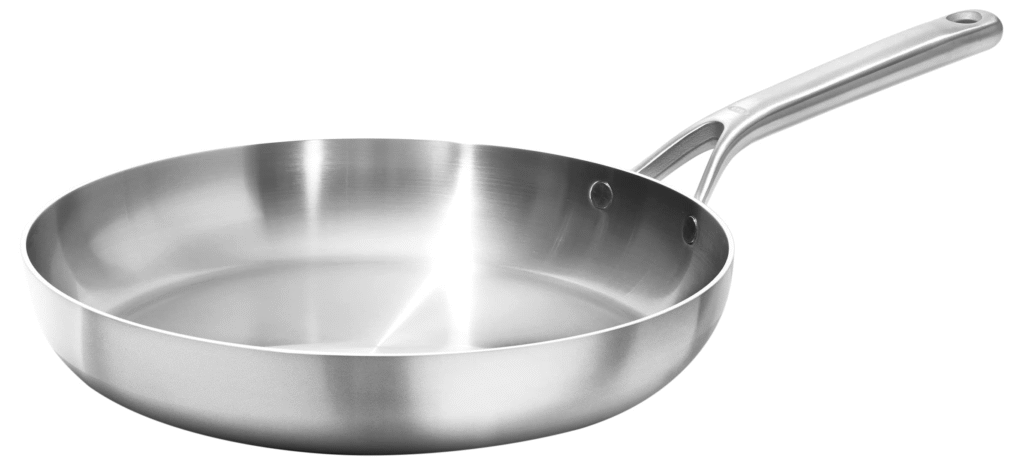
While cast iron is great for searing, it’s not ideal for everything. Acidic foods (like a long-simmering tomato sauce or a wine reduction) can react with the iron and take off the seasoning layer.
Enter the 12-inch stainless steel pan (preferably with a helper handle).
- What is “Tri-Ply”? Stainless steel alone is a poor heat conductor. Good stainless cookware sandwich an inner core of aluminum (or copper) between two layers of durable stainless steel. This gives you ultra-even heat distribution without hot spots.
- The Secret to Stainless: The reason restaurant food tastes so good is fond—the browned, caramelized bits left on the bottom of a pan after searing meat or roasting veggies. Stainless steel creates incredible fond. Add a splash of wine, stock, or butter, scrape those bits up, and you have an instant world-class pan sauce.
5. A Large Dutch Oven (5.5 to 7 Quarts)
A heavy-bottomed Dutch oven is the king of slow, cozy cooking. It is a thick-walled pot, usually made of cast iron, with a tight-fitting lid.
- Enameled vs. Bare Cast Iron: For a Dutch oven, go with Enameled Cast Iron (like Le Creuset, Staub, or Lodge). The enamel coating means you don’t have to season it, and you can simmer highly acidic tomato stews, braise short ribs in wine, or boil pasta without worrying about rust.
- What it does: Braising, soup-making, deep-frying, sourdough bread baking, and large-batch chili. It holds temperature so steadily that once it reaches a simmer, you can turn your burner down to low and let it do its magic for hours.
6. A 3-to-4 Quart Stainless Steel Saucepan
You need something smaller than a Dutch oven for the daily tasks: boiling grains, reheating soups, making a batch of oatmeal, melting butter, or blanching veggies.
A 3-quart stainless steel saucepan with a tight-fitting lid is the absolute sweet spot. Smaller 1-quart pans overflow too easily; 5-quart pots are bulky and slow to heat.
The Unsung Prep Essentials
Having the right cookware is only half the battle. Prep work is where 70% of cooking actually happens. These prep tools turn chaotic, messy prep into an easy, streamlined process.
[ CORE PREP TOOLKIT ]
• 12″ Stainless Tongs <- Your “extended hand”
• Silicone Spatula <- Scrapes every drop
• Fish Spatula (Metal) <- Delicate lifting & flipping
• Y-Peeler <- Sharp, cheap, fast
• Set of Metal Bowls <- Mise en place & mixing
7. Stainless Steel Tongs (12-Inch)
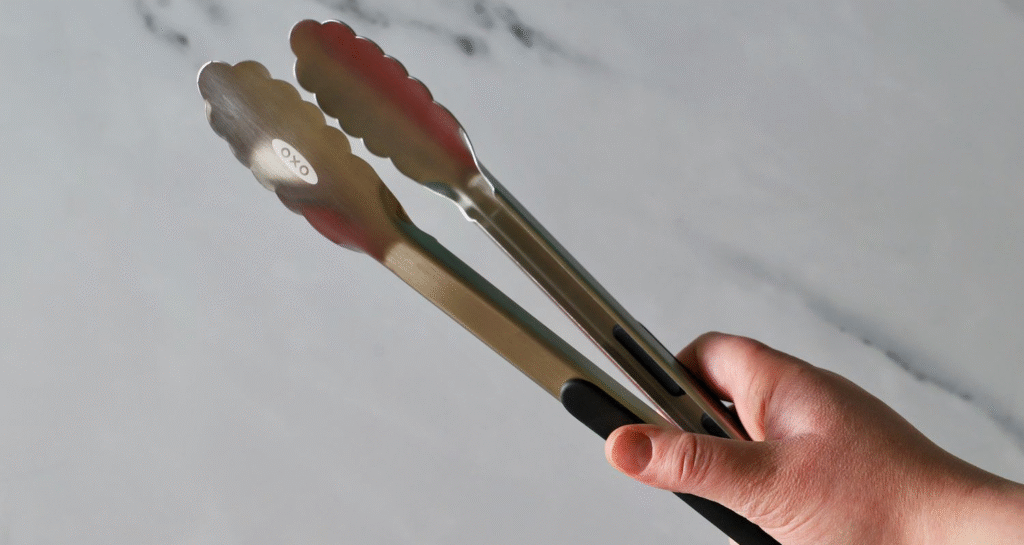
Professional cooks treat tongs as an extension of their own hands. If you are flipping bacon with a fork or trying to turn a sizzling hot steak with a spatula, stop immediately and get a pair of 12-inch spring-loaded locking tongs.
- Look for: Simple, all-stainless steel construction with a pull-lock at the top. Skip the ones with silicone tips unless you are using them exclusively on cheap non-stick pans—silicone tips don’t grip meat cleanly and are harder to wash.
8. A Metal “Fish Spatula”
Don’t let the name fool you. A fish spatula (or offset slotted spatula) isn’t just for seafood. It is, bar none, the single best spatula design ever invented.
- Why it’s better than a regular spatula: It is made of ultra-thin, flexible spring steel with angled slots. It slides effortlessly under delicate eggs, seared burgers, and roasted vegetables without tearing them apart or smashing them into mush. It weighs almost nothing and gives you incredible control.
9. High-Heat Silicone Spatulas
You need at least two good silicone spatulas.
- What to look for: Get a seamless, single-piece silicone spatula. Cheap two-piece spatulas (where a silicone head slips onto a wooden or plastic handle) are bacterial nightmares—moisture gets trapped inside the joint and grows hidden mold.
- Usage: Scrapers, egg scrambling, stirring sauces, and ensuring zero waste when pouring batter out of a bowl. Make sure it is heat-resistant up to at least 450°F (230°C) so it won’t melt when touching a hot pan.
10. A Set of Stainless Steel Nesting Bowls
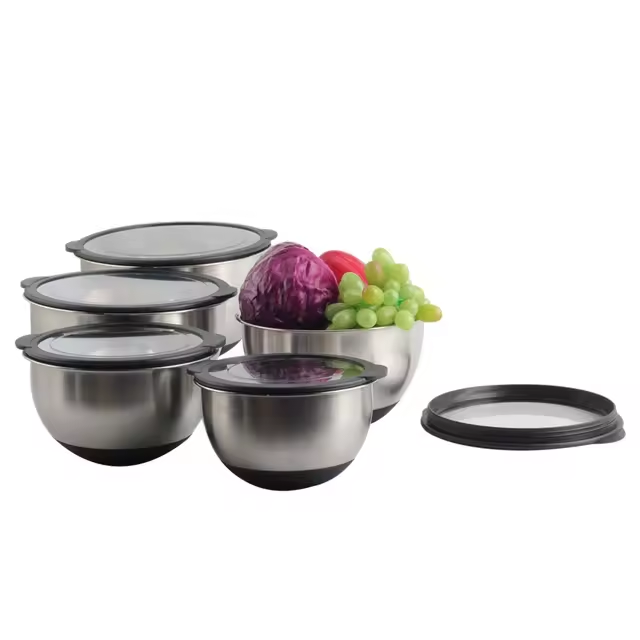
Glass mixing bowls are heavy, slippery when wet, and break if dropped in a stainless steel sink. Plastic bowls retain oil, stain from tomato sauce, and absorb onion/garlic odors forever.
Stainless steel mixing bowls are practically indestructible. They are lightweight, stack neatly into a tiny footprint, and clean up in seconds. Buy a cheap set of 3 to 5 nesting stainless bowls and you’ll use them for everything from tossing salads to organizing your mise en place (prepped ingredients).
11. A Swiss-Style “Y” Vegetable Peeler
Ditch the classic straight swivel peeler your parents had in the 1990s.
A Y-peeler (which looks like a razor) offers far superior leverage, feels natural in your palm, and cuts your peeling time in half. Brands like Kuhn Rikon make 3-packs of these for under $15. They are razor-sharp, lightweight, and make peeling butternut squash or potatoes feel effortless.
Baking & Roasting Essentials
Even if you aren’t a baker who spends weekends making delicate pastries, you still need roasting gear for savory meals.
| Essential Tool | Why You Need It | What to Look For |
| Half-Sheet Pans (Commercial Grade) | For sheet-pan dinners, roasting veggies, baking cookies, and cooling meats. | Heavy-gauge rimmed aluminum (18×13 inches). Skip non-stick coated pans—they warp at high heat and peel over time. |
| Stainless Wire Cooling Racks | Fits directly inside your half-sheet pan. Essential for air circulation when roasting or crisping bacon. | Oven-safe stainless steel (no non-stick coating) with a cross-wire pattern. |
| Parchment Paper Rolls | Prevents sticking, makes clean-up instantaneous, and protects pans. | Unbleached parchment paper. Far superior and safer than aluminum foil for delicate food contact. |
Small Appliances—What’s Worth the Counter Space?
Small appliances are the biggest trap in kitchen buying. They are marketed as “time-savers,” but if an appliance takes 15 minutes to clean and occupies half a cabinet, did it really save you time?
Here are the only three kitchen small electrics truly worth owning:
1. An Immersion Blender (Stick Blender)
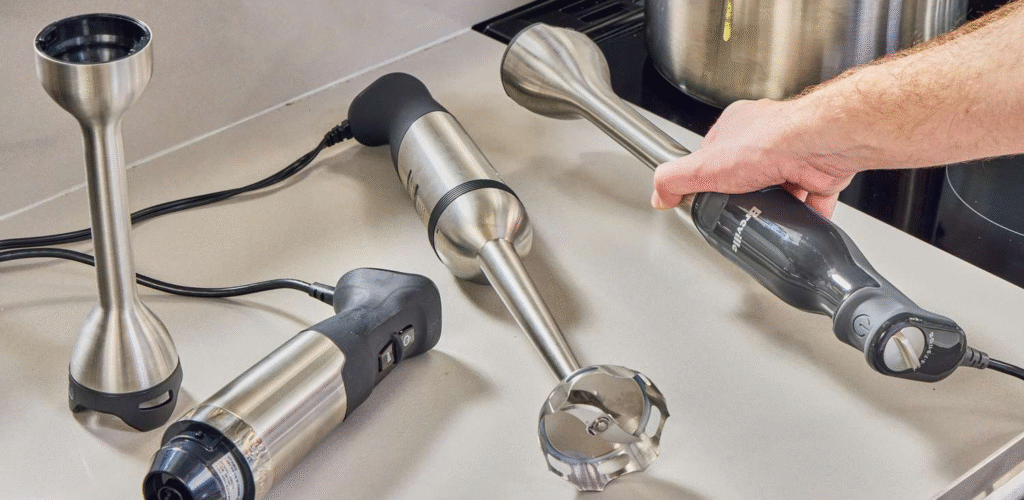
Instead of pouring scalding-hot soup into a traditional blender jar in small batches (and chancing a steam explosion that sprays hot soup across your ceiling), an immersion blender lets you blend directly in the pot.
- Bonus: Most come with a tall blending cup that makes homemade mayonnaise or Dutch-style hollandaise in literally 30 seconds.
2. A Digital Kitchen Scale
Measuring by volume (cups, tablespoons) is notoriously inaccurate. A cup of flour can weigh anywhere from 120 grams to 180 grams depending on how packed it is!
- A cheap $15 digital scale eliminates guesswork, ensures consistent baking results, cuts down on dirty dish usage (just weigh ingredients directly into your mixing bowl), and makes portion tracking effortless.
3. A Quality Food Processor (11-14 Cup)
If you cook for a family or like to meal-prep, a heavy-duty food processor is a game-changer. It shreds a block of cheese in 5 seconds, turns chickpeas into hummus in a minute, and makes pie crust pastry without melting the butter.
- Note: Choose a solid, heavy-base food processor, such as a Cuisinart model. Lightweight, cheaper processors can literally “walk” across your kitchen counter from vibrations when grinding tougher ingredients.
The “Hall of Shame”—Gimmicks to Skip Completely
Save your money and kitchen footprint by ignoring these marketing traps:
- Garlic Presses: They create an acrid, bitter garlic paste and are an absolute nightmare to dig garlic pulp out of during cleaning. Use the flat side of your chef’s knife to crush the clove, then mince it manually. It takes the same amount of time and tastes better.
- Avocado Slicers / Egg Separators / Banana Slicers: Your chef’s knife and your clean hands can do every single one of these tasks faster, cleaner, and without needing a dedicated drawer slot.
- Cheap 10-Piece Non-Stick Cookware Sets: Non-stick coatings (even modern ceramic ones) break down over time. Heat destroys them. Metal spoons ruin them. Within 2 to 3 years, a cheap non-stick pan becomes useless toxicity risk. The Golden Rule of Non-Stick: Only own ONE cheap non-stick pan (an 8-inch or 10-inch skillet) reserved exclusively for delicate eggs. Treat it as a disposable tool, replace it every couple of years, and do all your heavy cooking in cast iron or stainless steel.
The Smart Buyer’s Action Plan
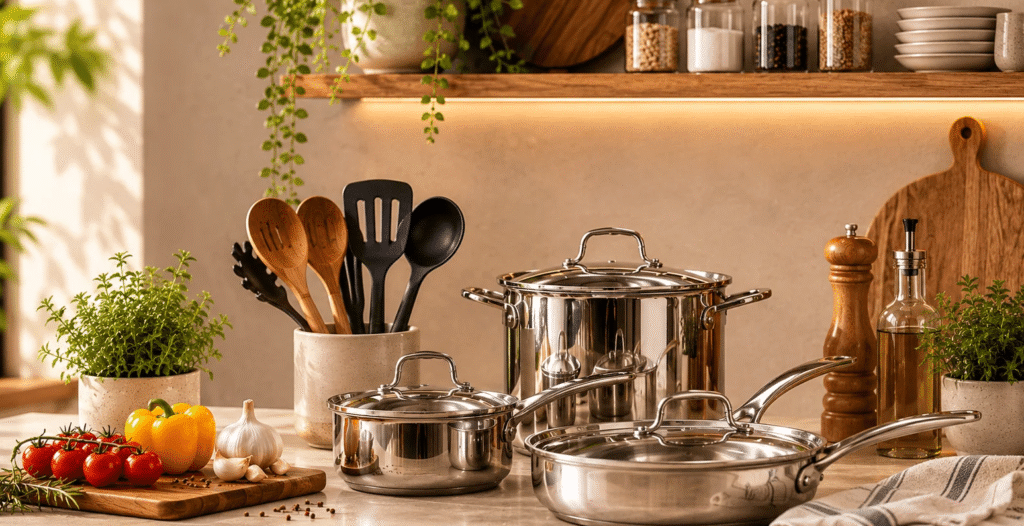
Building a dream kitchen doesn’t mean dropping $3,000 on day one at a high-end kitchenware boutique.
Start small with a solid foundation. Buy items as your skills grow, and prioritize quality over quantity every time.
Your First $150 Budget:
- Victorinox 8-Inch Chef’s Knife (~$45)
- Large Wooden or Plastic Cutting Board (~$30)
- 12-Inch Lodge Cast Iron Skillet (~$30)
- Swiss Y-Peeler + 12-Inch Tongs (~$20)
- 1 Commercial Half-Sheet Pan (~$20)
Master these core items first. You will quickly find that cooking becomes faster, less frustrating, and immensely more enjoyable when your kitchen isn’t cluttered or you’re not struggling with dull tools.Invest in the kitchen basics, care for them properly, and they will feed you well for decades to come.